Engineering Plastics for Extreme Wear & Industrial Applications——YiYuan New Material | Founded in 2021


Please give us a message
UHMWPE Hopper Liners
Product Parameters
Designed for demanding bulk-material handling environments, these liners combine a low-friction surface with dependable wear and impact resistance. Material selection can be matched to ordinary abrasive service or underground coal-mining conditions requiring antistatic and flame-retardant performance.
Detailed Description and Application Guidance
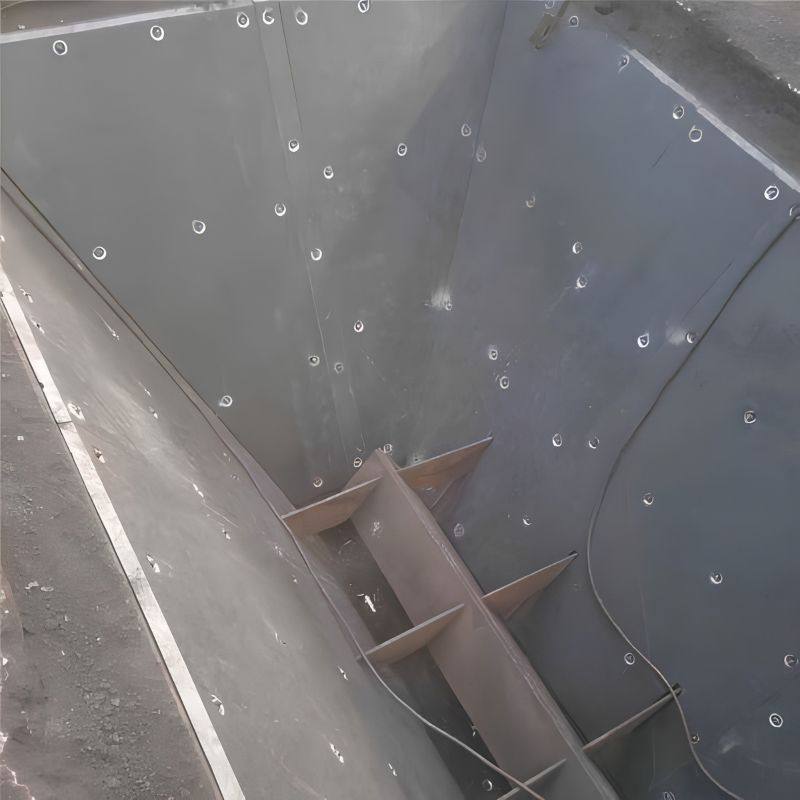
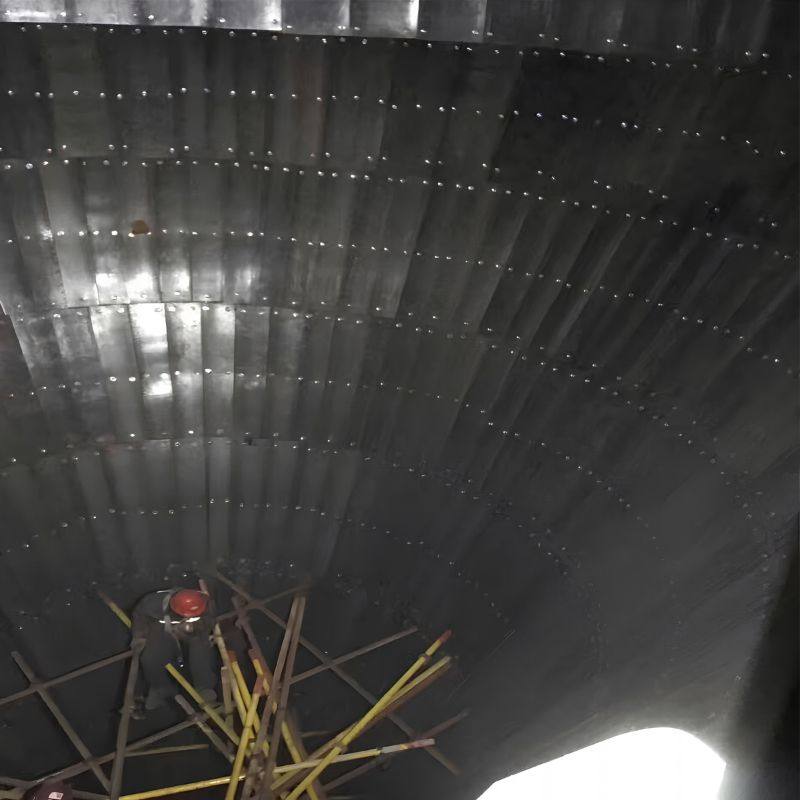
UHMWPE Hopper Liners are compression-molded from ultra-high molecular weight polyethylene for the internal protection of raw coal bunkers, storage hoppers, transfer chutes, and drop pipes. They address common handling problems that affect plant uptime: material adhering to steel walls, arching at discharge points, repeated blockages, and progressive abrasion of the bunker structure. For operators moving coal, ore, crushed stone, powders, or granular materials, a properly fitted liner creates a smoother contact surface while protecting the underlying equipment.
A Practical Alternative to Heavy Metal Linings
Conventional manganese steel or stainless-steel liners can add significant weight to a hopper and may still allow wet fines to build up on the surface. UHMWPE Hopper Liners provide a lighter alternative that is easier to handle during installation and replacement. Their low dynamic friction coefficient of 0.07–0.11 supports more consistent material movement, especially where damp coal, coal dust, fine mineral powder, or mixed-size aggregate tends to cling to metal. The goal is not merely surface protection; it is to improve discharge continuity and reduce the frequency of manual cleaning interruptions.
Wear and Impact Protection Where Material Falls
At hopper inlets, chute transitions, and discharge zones, falling material can repeatedly strike the same area. The high molecular weight structure used in these sheets provides strong resistance to abrasive sliding and impact from coal, ore, and sharp aggregate. Compared with ordinary steel and nylon materials, the liner is intended for high-wear applications where equipment owners need to protect steel walls and extend maintenance intervals. It also remains suitable for low-temperature operating environments down to -40°C, helping avoid the brittleness concerns associated with some conventional materials.
Low Surface Friction Helps Control Sticking and Bridging
Material flow problems often begin when fines remain attached to rough, corroded, or damp steel surfaces. Once accumulation starts, the effective opening of the bunker narrows and bridging may follow. The naturally self-lubricating surface of UHMWPE reduces resistance between the handled material and the liner. Wet coal and powdered materials are less likely to remain on the panel face, which can help relieve buildup, reduce arching, and support more efficient discharge. Actual flow performance depends on material moisture, particle size, chute angle, and equipment design, so the liner should be specified as part of the overall handling system.
Stable Performance in Damp and Corrosive Conditions
With water absorption of ≤0.01%, the material remains stable in humid working areas where steel linings may corrode or require frequent inspection. It is resistant to acid, alkali, dust-related corrosion, and moisture exposure. This makes it well suited to underground coal operations, power plant coal-handling systems, and mineral-processing facilities where washdown, condensation, and humid feedstock are routine. The liner does not rust, helping maintenance teams avoid corrosion-driven degradation of the lining surface.
Flexible Fabrication for Equipment Geometry
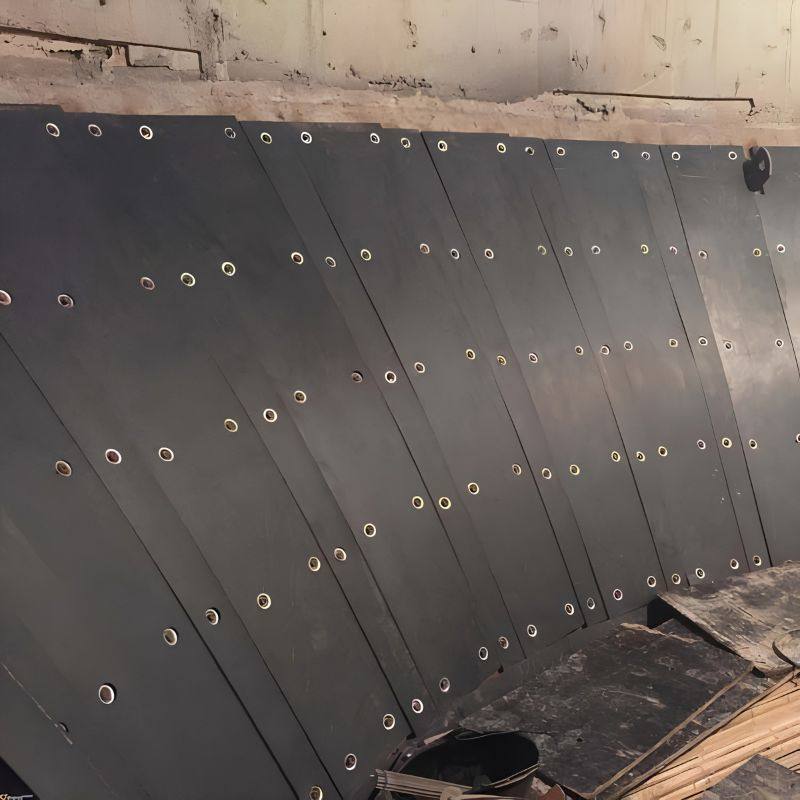
Each lining project has different wall dimensions, mounting locations, and wear patterns. Panels can be supplied with countersunk installation holes for bolt fixing, allowing the fastener heads to sit below the material-contact surface. They can also be cut and processed into curved pieces, U-shaped sections, and other special profiles for chutes, pipe interiors, hopper corners, and irregular transfer points. Correct panel layout is important: joints, bolt locations, and exposed edges should be positioned to minimize direct impact and prevent material from catching during flow.
Key Selection and Installation Benefits
- Lightweight handling: easier to move and install than comparable steel plates during maintenance work.
- Counterbored bolt mounting: supports secure fastening while maintaining a relatively smooth working face.
- Custom processing: available for required dimensions, drilling patterns, bends, arcs, and shaped components.
- Modified grades: standard wear-resistant material, antistatic material, or flame-retardant antistatic material can be selected according to the operating environment.
- Convenient maintenance: worn sections can be planned for replacement without replacing the entire steel hopper or chute body.
Applications Across Bulk Handling Industries
In underground coal mines, these panels are used inside raw coal bunkers, buffer bins, coal chutes, and coal drop pipes. For explosion-sensitive underground environments, the flame-retardant antistatic grade can be selected to suit applicable operational requirements. In thermal power plants, they protect raw coal bunkers, dry-coal shed hoppers, and coal conveying chutes while helping limit coal powder adhesion. Mining and aggregate operations use them in ore bins, aggregate hoppers, and crusher discharge chutes exposed to continuous abrasive scouring.
Other suitable applications include metallurgical powder storage bins, sand and gravel hoppers, grain storage bins, and dump-truck body linings. The common requirement is a durable internal surface that supports material movement while resisting abrasion, moisture, and routine handling impact. Before ordering, users should provide the equipment drawing or measured liner area, material type, temperature range, expected impact zone, desired thickness, and mounting arrangement. This information helps determine whether a flat panel, curved part, U-shaped liner, or modified grade is the most appropriate choice.
Manufacturing Support from Dezhou Yiyuan New Material Technology Co., Ltd.
Dezhou Yiyuan New Material Technology Co., Ltd. specializes in rubber and plastic products, including UHMWPE sheets, wear-resistant lining sheets, rollers, machined special-shaped parts, PE sheets, PP sheets, nylon products, polyurethane products, and customized components. The company focuses on product quality, honest sales service, and reliable contract performance. For UHMWPE Hopper Liners, this manufacturing capability supports application-focused processing rather than a one-size-fits-all approach, helping customers obtain liner components that match their equipment layout and maintenance needs.
Get a quote and proposal
Your privacy is protected by us (please refer to the Privacy Policy).
Phone
Address
