Engineering Plastics for Extreme Wear & Industrial Applications——YiYuan New Material | Founded in 2021


Please give us a message
UHMWPE Outrigger Pads for Mobile Cranes
Product Parameters
Reliable Ground Support for Heavy Lifting Operations
Outrigger pads, also known as crane pads, support pads or load-spreading blocks, are placed beneath the stabiliser legs of mobile cranes, concrete pump trucks and other heavy construction equipment. Their purpose is straightforward but essential: to increase the contact area between the outrigger and the ground. By distributing concentrated forces over a larger surface, the pad helps reduce the risk of ground penetration, uneven settlement, equipment lean and potential overturning during lifting work.
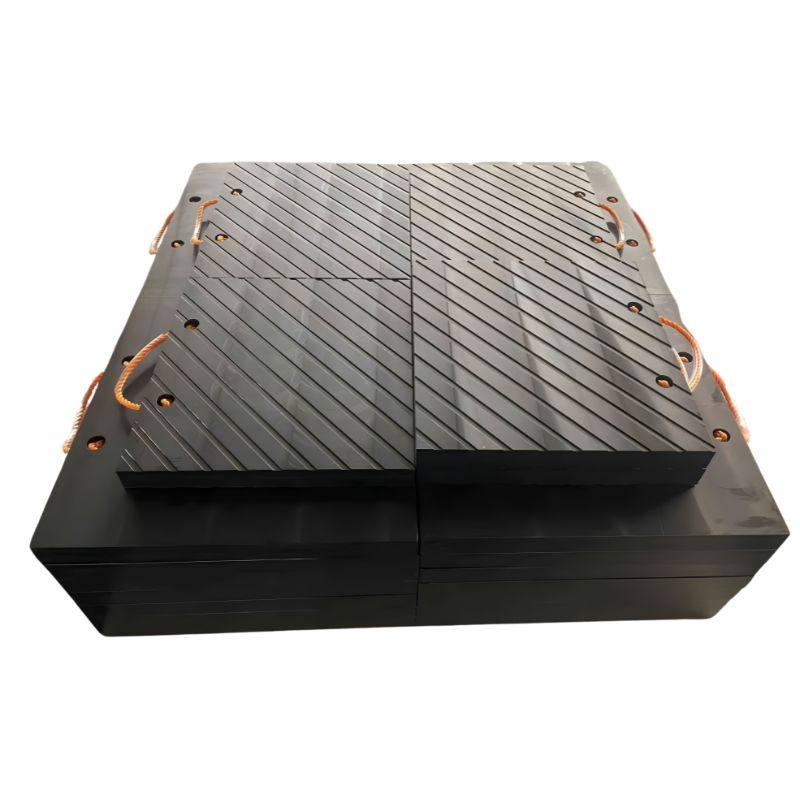
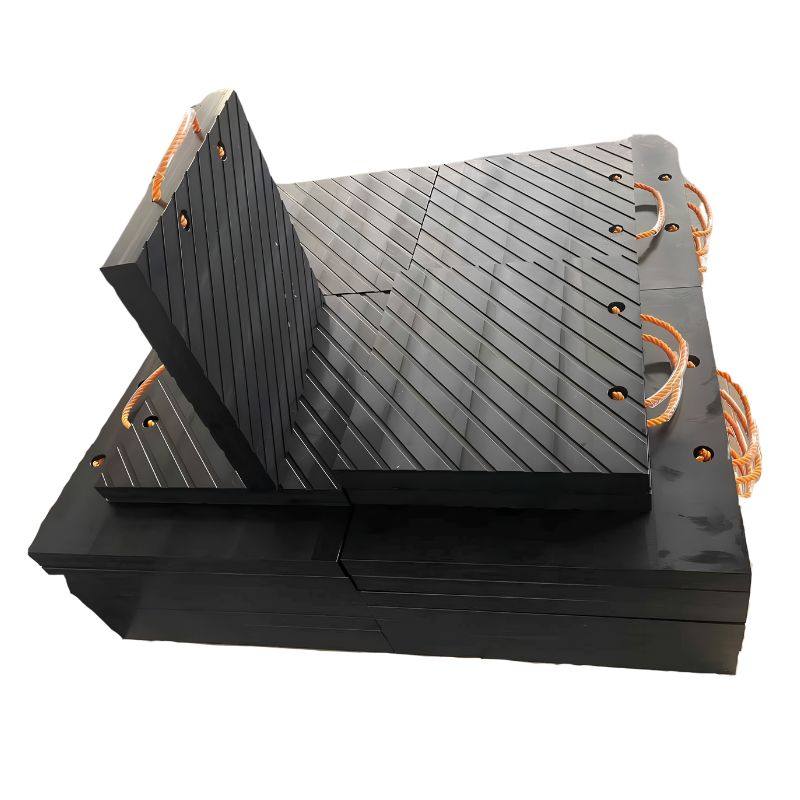
These UHMWPE Outrigger Pads for Mobile Cranes are compression moulded from high-performance UHMWPE or HDPE. UHMWPE is selected where demanding impact resistance, toughness and wear performance are required, while HDPE provides a practical polymer solution for suitable support applications. Unlike metal plates, polymer pads do not rust and are substantially easier to handle on site. A rope handle is fitted for convenient carrying, allowing an operator to move and position the pad without additional lifting equipment in many routine working situations.
Designed to Spread Load Rather Than Concentrate It
A crane outrigger can apply considerable force to a relatively small area. On compacted surfaces this may be manageable, but on wet soil, sand, backfilled ground, mud or uneven terrain, concentrated loading can quickly cause an outrigger foot to sink. A correctly selected pad creates a broader bearing surface, helping the equipment maintain a more stable working position. This makes support pads an important practical accessory for lift planning and daily site preparation.
The stated 10–200 tonne load-bearing range supports use across different classes of heavy equipment. However, pad selection must always consider the actual outrigger reaction, ground condition, pad dimensions, thickness, machine manufacturer guidance and site-specific lift plan. A pad cannot compensate for unsuitable ground, poor machine set-up or an incorrectly assessed lifting operation. Operators should inspect the bearing area and follow applicable safety procedures before work begins.
Tough Polymer Construction for Real Jobsite Conditions
One of the principal advantages of UHMWPE is its high toughness. Under heavy pressure, the material is intended to flex rather than fail in a sudden brittle manner, offering a dependable safety margin in challenging field environments. This impact-resistant behaviour is valuable where pads are frequently moved, dropped, exposed to vibration or used on uneven construction surfaces. The material also remains tough in low-temperature conditions within the specified -70°C to +80°C applicable temperature range.
With water absorption of ≤0.01%, the pad material does not readily take on moisture. This is particularly useful for outdoor fleets operating through rain, snow and muddy conditions. It also resists common corrosive influences such as acids, alkalis, salts and salt spray. Unlike timber pads, it will not rot, splinter or absorb water; unlike steel plates, it does not corrode. Its electrically insulating character provides an additional material benefit where non-conductive ground-contact components are preferred.
Easier Handling, Faster Site Set-Up
Handling efficiency matters on active sites. These pads weigh approximately one-seventh of comparable steel plates, making them far more manageable for transport and placement. The integrated rope handle supports a safer, more comfortable grip and helps reduce unnecessary manual handling time. For crews that reposition equipment repeatedly throughout the day, a lighter pad can simplify set-up without sacrificing the practical function of load distribution.
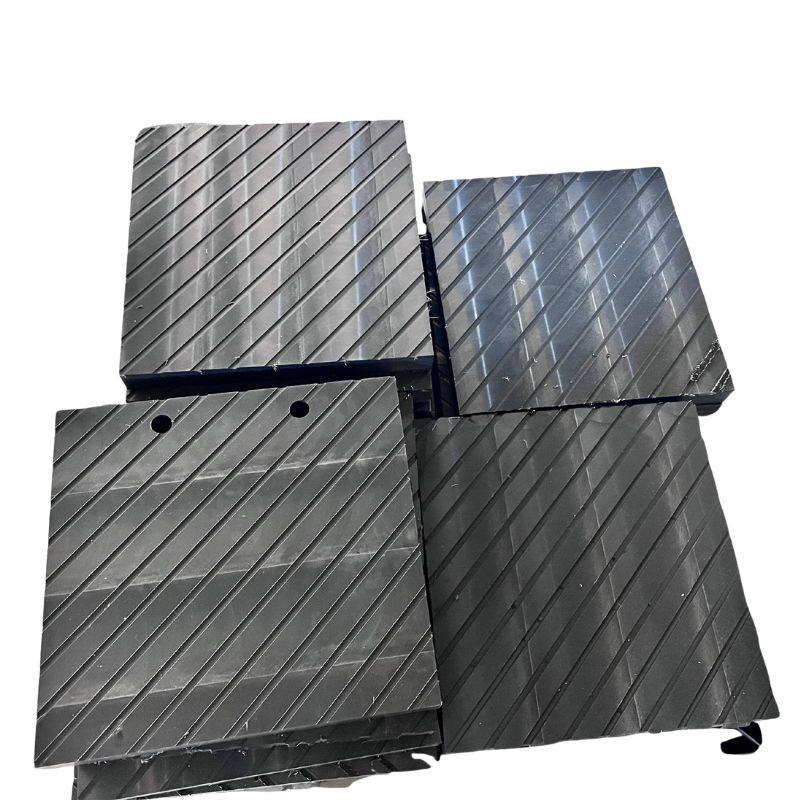
Optional anti-slip surface texturing can be machined to improve grip between the outrigger foot, the pad and the working surface. This is especially useful in wet, snowy or muddy environments where smooth contact surfaces may be less secure. The final texture and pad configuration can be matched to the intended equipment and site conditions.
Customised for Equipment and Working Requirements
Every fleet has different outrigger foot sizes, transport arrangements and working environments. For this reason, these UHMWPE Outrigger Pads for Mobile Cranes can be manufactured in customised dimensions, thicknesses, colours and shapes. Square and round pads are common options, while special-shaped parts can be produced for equipment with particular support-foot geometries. Company logos may also be incorporated for fleet identification and asset management.
- Mobile crane support: suitable for truck cranes and crawler crane outrigger applications.
- Concrete pumping: supports pump truck stabilisers during placement work.
- Access equipment: assists with ground load distribution beneath aerial work platform outriggers.
- Construction and infrastructure: practical for building sites, wind power installation and mining operations.
- Emergency response: useful for fire vehicles and rescue lifting equipment working away from paved surfaces.
- Industrial support: can serve as a bearing block beneath large equipment, presses and other heavy machinery where appropriate.
A Practical Long-Term Site Safety Accessory
Wear resistance, impact resistance and weather durability allow these pads to be used repeatedly over extended periods when correctly selected, inspected and maintained. Before each use, check for excessive wear, deformation, deep cuts or damage to the handle. Place the pad on stable ground, keep the contact area clear of loose debris and ensure the outrigger foot is centred on the pad. Never stack pads unless this arrangement is specifically approved by the equipment manufacturer and the lift plan.
Dezhou Yiyuan New Material Technology Co., Ltd. specialises in rubber and plastic products, including UHMWPE sheets, wear liners, rollers, custom UHMWPE components, PE sheets, PP sheets, nylon products, polyurethane products and machined special-shaped parts. The company follows a service principle centred on quality, honest sales service and reliable contractual cooperation. For contractors, fleet managers and equipment operators seeking durable, lightweight ground-support solutions, UHMWPE Outrigger Pads for Mobile Cranes provide a practical option for safer and more efficient heavy-equipment set-up.
Get a quote and proposal
Your privacy is protected by us (please refer to the Privacy Policy).
Phone
Address
